
Review: Re-Creation, Jim Sheridan is still on top
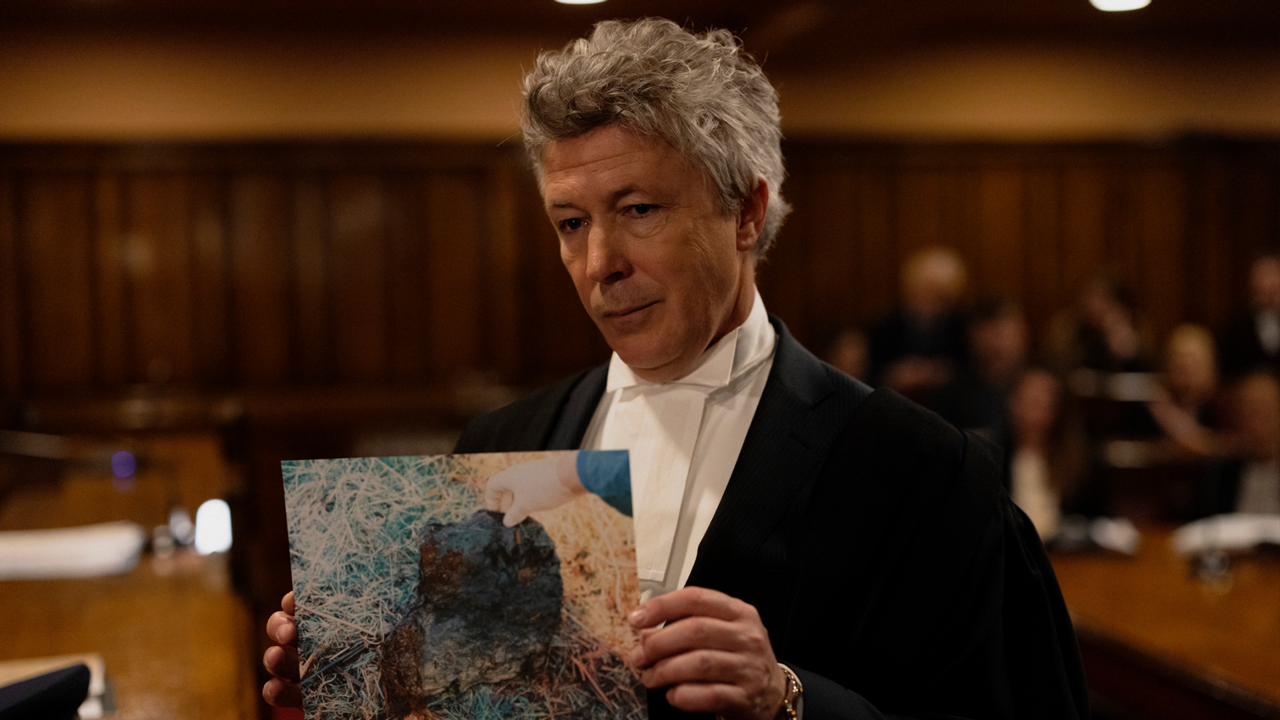
There is a particular kind of tension that only exists in a locked room where twelve people are forced to play God. Cinema has long been obsessed with the jury—that cross-section of humanity tasked with distilling “truth” from a mountain of legal theater. In Re-Creation, Jim Sheridan and David Merriman return to this pressure cooker, not to replicate the legal procedural, but to perform a cinematic exorcism on Ireland’s most haunted cold case: the murder of Sophie Toscan du Plantier.
While the actual history of Ian Bailey is a labyrinth of French trials and West Cork folklore, Re-Creation operates in a speculative space. It imagines the trial that never happened in Ireland, stripping away the decades of media noise to see what remains when twelve strangers are forced to look at the bones of the evidence.
The film’s pulse is found in the collision between John Connors and Jim Sheridan himself. Connors is a force of nature here. He plays a version of himself—or perhaps a manifestation of the collective Irish psyche—who is anchored in a gut-deep certainty of Bailey’s guilt. It is a performance of raw, uncomfortable emotional intelligence; he isn’t just arguing facts, he’s defending a worldview shaped by his own history.
Opposite him, Sheridan’s choice to cast himself as the jury foreman is a stroke of meta-commentary that actually works. Having spent years immersed in this case for his documentary Murder at the Cottage, Sheridan doesn’t have to “act” his obsession. He brings a weathered, weary authority to the table, acting as the friction to Connors’ fire. Their scenes are a masterclass in how personal bias masquerades as logic.
In a daring move, Colm Meaney portrays Ian Bailey but is never granted a single line of dialogue. It is a brilliant subversion. For years, the real Bailey was a man of infinite words, a constant presence in the headlines. By silencing him, the filmmakers force the audience—and the jury—to stop listening to the character and start looking at the case.
However, the soul of the film belongs to Vicky Krieps. As Juror Eight, Krieps serves as a conduit for the victim’s dignity. Her performance is anchored in a quiet, immovable resilience. She isn’t just a contrarian; she is the personification of the “reasonable doubt” that the legal system demands but the human heart often rejects. A late-film sequence involving a flashlight—a recreation of Sophie’s final moments—is handled with such terrifying sensitivity that it reframes the entire film. It moves Re-Creation away from “true crime” voyeurism and into a space of genuine memorial.
Clocking in at a lean 90 minutes, the film is claustrophobic and stark. While it occasionally feels like it’s circling the same emotional drain, it never loses its grip. The cinematography by Lyle Vincent captures the shrinking walls of the jury room as the sun sets, mirroring the narrowing options for the characters.
Re-Creation doesn’t pretend to have the answers that have eluded the authorities for thirty years. Instead, it asks why we are so desperate for a villain that we sometimes forget to look for the truth. It is a haunting, necessary piece of work that proves Jim Sheridan is still one of our most vital storytellers.