
Review: Rosemead is a must watch
There is a specific, quiet alchemy to Lucy Liu’s recent work that suggests an actress no longer interested in the stylized cool of her early career, but in the jagged edges of the human condition. 2025 has quietly become the Year of Liu. While audiences were reminded of her lethal precision in the restored Kill Bill: The Whole Bloody Affair, and shaken by her spectral domesticity in Steven Soderbergh’s Presence, it is Eric Lin’s Rosemead that offers the most devastating proof of her current range.
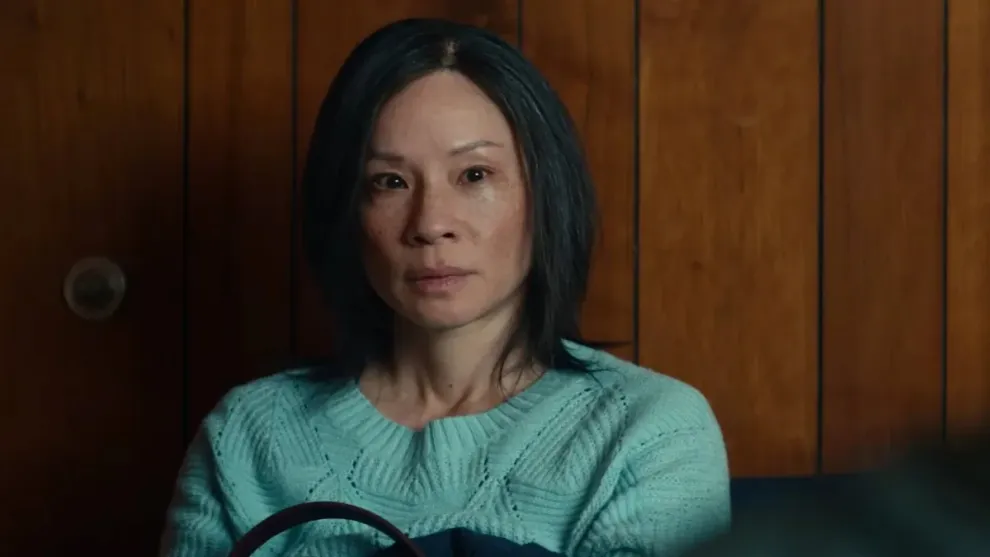
Based on Frank Shyong’s haunting Los Angeles Times reporting, Rosemead places Liu at the center of a domestic pressure cooker in the San Gabriel Valley. She portrays Irene, a woman navigating a cruel duality: she is a terminally ill widow fighting a losing battle with cancer, while simultaneously trying to tether her teenage son, Joe (Lawrence Shou), to reality. Joe is spiraling into the depths of schizophrenia, and as his fixations turn toward the dark mechanics of violence, Irene is forced to decide what “protection” looks like when both the body and the mind are failing.
What makes Liu’s performance so resonant is her refusal to lean into melodrama. As Irene, she carries a weariness that feels cellular. She isn’t just a mother in grief; she is a woman running out of time in a world that offers no safety net. The film subtly indicts a fractured healthcare system without ever stepping onto a soapbox. The tragedy isn’t just in the diagnosis, but in the isolation—the way the American Dream curdles when mental health and poverty collide.
Newcomer Lawrence Shou is a revelation. Cast from obscurity, he matches Liu’s veteran gravitas with a performance that is both terrifying and profoundly vulnerable. The chemistry between the two is defined by a desperate, frantic love. Their scenes together feel claustrophobic, captured by Lyle Vincent’s stark, unadorned cinematography that seems to physically shrink the world around them as Joe’s condition worsens.
Director Eric Lin, making his feature debut after a celebrated career as a cinematographer, brings a visual discipline to the film that mirrors Irene’s internal state. While the film occasionally suffers from the pacing stumbles common in first-flight features—circling its emotional drain a few times too many—the script by Marilyn Fu finds a rhythmic, authentic pulse in the dialogue. Fu captures the specific nuances of the Chinese-American experience in the valley, grounding the high-stakes tragedy in a very tangible sense of place.
Ultimately, Rosemead is a difficult watch, but an essential one. It avoids the easy sensationalism of the “true crime” genre to focus on the impossible choices forced upon the marginalized. Liu’s Irene is a masterclass in controlled desperation. It is a performance that doesn’t just demand your attention—it haunts you long after the credits roll, serving as a somber reminder of the lengths a parent will go to when every door has been slammed shut.
There is a specific, quiet alchemy to Lucy Liu’s recent work that suggests an actress no longer interested in the stylized cool of her early career, but in the jagged edges of the human condition. 2025 has quietly become the Year of Liu. While audiences were reminded of her lethal precision in the restored Kill Bill: The Whole Bloody Affair, and shaken by her spectral domesticity in Steven Soderbergh’s Presence, it is Eric Lin’s Rosemead that offers the most devastating proof of her current range.
Based on Frank Shyong’s haunting Los Angeles Times reporting, Rosemead places Liu at the center of a domestic pressure cooker in the San Gabriel Valley. She portrays Irene, a woman navigating a cruel duality: she is a terminally ill widow fighting a losing battle with cancer, while simultaneously trying to tether her teenage son, Joe (Lawrence Shou), to reality. Joe is spiraling into the depths of schizophrenia, and as his fixations turn toward the dark mechanics of violence, Irene is forced to decide what “protection” looks like when both the body and the mind are failing.
What makes Liu’s performance so resonant is her refusal to lean into melodrama. As Irene, she carries a weariness that feels cellular. She isn’t just a mother in grief; she is a woman running out of time in a world that offers no safety net. The film subtly indicts a fractured healthcare system without ever stepping onto a soapbox. The tragedy isn’t just in the diagnosis, but in the isolation—the way the American Dream curdles when mental health and poverty collide.
Newcomer Lawrence Shou is a revelation. Cast from obscurity, he matches Liu’s veteran gravitas with a performance that is both terrifying and profoundly vulnerable. The chemistry between the two is defined by a desperate, frantic love. Their scenes together feel claustrophobic, captured by Lyle Vincent’s stark, unadorned cinematography that seems to physically shrink the world around them as Joe’s condition worsens.
Director Eric Lin, making his feature debut after a celebrated career as a cinematographer, brings a visual discipline to the film that mirrors Irene’s internal state. While the film occasionally suffers from the pacing stumbles common in first-flight features—circling its emotional drain a few times too many—the script by Marilyn Fu finds a rhythmic, authentic pulse in the dialogue. Fu captures the specific nuances of the Chinese-American experience in the valley, grounding the high-stakes tragedy in a very tangible sense of place.
Ultimately, Rosemead is a difficult watch, but an essential one. It avoids the easy sensationalism of the “true crime” genre to focus on the impossible choices forced upon the marginalized. Liu’s Irene is a masterclass in controlled desperation. It is a performance that doesn’t just demand your attention—it haunts you long after the credits roll, serving as a somber reminder of the lengths a parent will go to when every door has been slammed shut.