
Review: Wizkid: Long Live Lagos is more than just about a popstar
Lagos isn’t just a city in Wizkid: Long Live Lagos; it’s a psychological condition. It is the noise, the hunger, and the frantic, unyielding rhythm that hammered Ayodeji Balogun into “Starboy” long before the world ever caught the scent of his talent. In HBO’s new documentary, director Karam Gill chooses not to recount a standard rise-to-fame narrative, but rather to examine what happens when a city’s collective ambition is concentrated into a single, diamond-draped human being.
The film kicks off with a specific kind of visual bravado: Wizkid in all-white, adorned in high-stakes sapphires, lighting a spliff with the deliberate slow-motion of a man who knows the clock waits for him, not the other way around. But beneath this surface of superstar gloss, Gill maintains a measured restraint. This isn’t a loud, hagiographic puff piece; it is a patient, almost voyeuristic look at the labor of legacy.
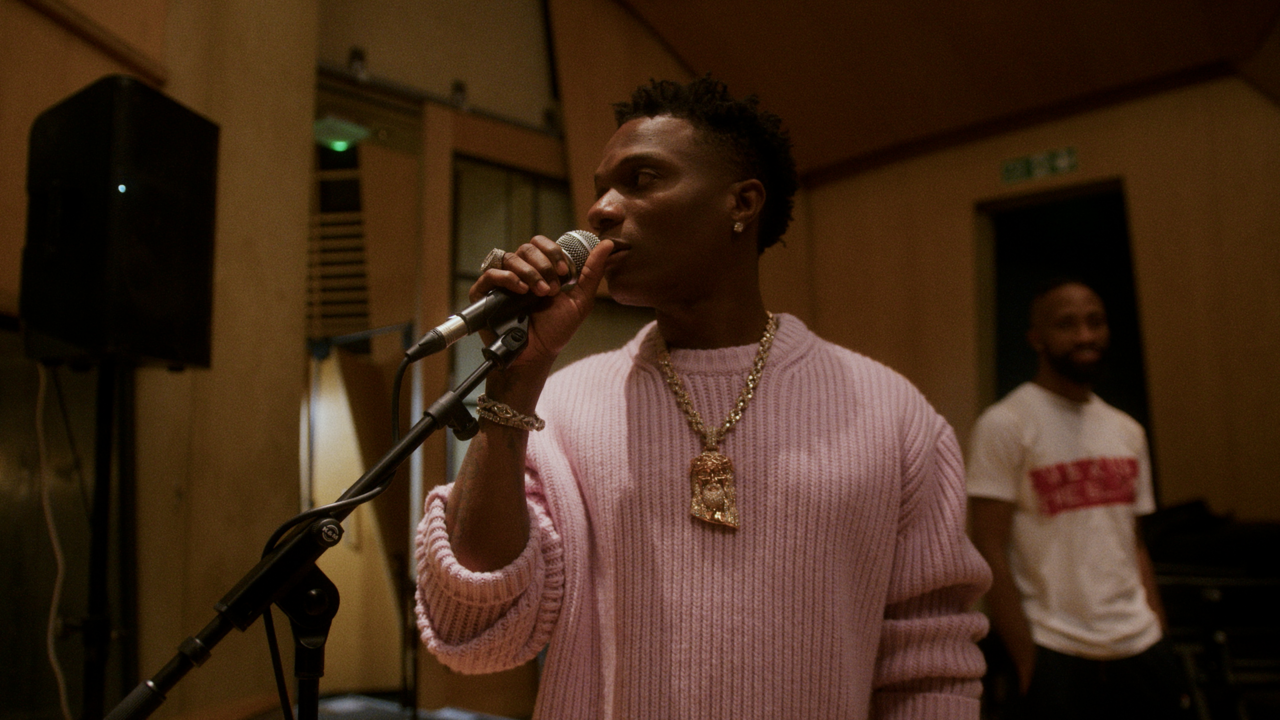
One of the film’s most grounded successes is its treatment of Jada Pollock. Rather than casting her as a background romantic interest, the documentary frames her as the essential structural integrity of the Wizkid operation. We see the quiet anxiety of rehearsals and the logistical grinding of the gears leading up to the historic Tottenham Hotspur Stadium show. It humanizes the myth, reminding us that global superstardom is less about magic and more about the crushing weight of preparation. This vulnerability peaks when personal tragedy, the worsening health of his mother, collides with professional peak, leaving Wizkid in a loud, heavy silence that the camera wisely refuses to look away from.
The documentary’s second act expands the lens, using voices like Femi Kuti and Seni Saraki to interpret Wizkid’s footprint. Femi Kuti, in particular, anchors the film in a lineage of African excellence, suggesting that Wizkid’s “politics” don’t look like the fiery protest of his predecessors. Instead, his politics are his presence. By occupying Western spaces like Tottenham on his own terms, he performs a quiet act of cultural reclamation. It’s an argument for existence as activism; he doesn’t need a slogan when his mural is already on every wall in the San Gabriel of his home.
Visually, the film draws a sharp, almost hostile contrast between its two primary locations. Lagos is captured with a gritty, beautiful texture—never romanticized into a postcard, but never reduced to “poverty porn.” It feels alive and bruising. London, by comparison, feels sterile and rigid, which only heightens the magnitude of what it means for the energy of Lagos to arrive there, unapologetic and fully formed.
If there’s a critique to be made, it’s that the film’s reverence occasionally acts as a shield, smoothing over the jagged edges of Wizkid’s more difficult silences. Yet, in the hands of Gill, this feels intentional. Long Live Lagos isn’t trying to demystify a star; it’s documenting a conduit. It’s a film about what happens when a restless city finally finds a voice that can carry its dreams across every border without losing the accent.