
Review: Yanuni is timeless
From its opening frames, Yanuni seizes the viewer with a sense of immediacy rarely found in environmental documentaries. Richard Ladkani’s film moves fluidly between high-stakes political confrontation and quieter, contemplative moments, crafting a portrait of resistance that feels both urgent and profoundly intimate. At the center is Juma Xiapaia, a charismatic Indigenous leader from Brazil’s Middle Xingu region, whose journey from impassioned adolescent activist to the first woman elected chief of her community becomes the emotional backbone of the film.
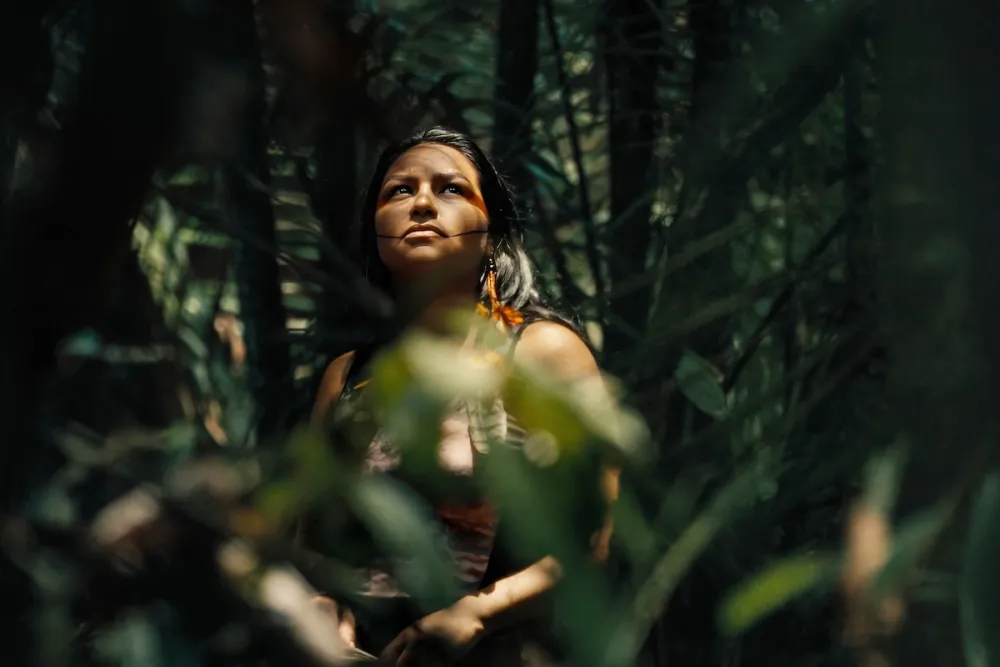
Ladkani introduces Juma through archival footage from 2009, capturing a young woman who articulates her commitment with the kind of fierce clarity that makes the stakes unmistakable: she declares that she is willing to die for her people. Those early images—Juma in ceremonial paint and resplendent feathered headdress—establish her as a living symbol of cultural pride and defiance. The passage of time in the film is measured not merely by years, but by escalating threats and acts of violence that punctuate her life. Six assassination attempts are referenced, a grim tally that underscores the mortal danger Indigenous leaders face amid ongoing land conflicts and governmental indifference.
The documentary’s tension peaks in a harrowing 2021 protest scene at Brasilia’s National Congress Palace. Ladkani places the camera—and, crucially, Juma—within striking proximity to the violence as riot police confront demonstrators. When officers open fire, the impact is visceral: muzzle flashes, shouts, the tangible panic of a crowd under siege. The cinematography refuses to sanitize the moment; instead, it immerses viewers in the chaotic immediacy of political struggle, conveying the thin margin between protest and catastrophe.
What sets Yanuni apart is how it balances these confrontational sequences with moments of stillness and reflection. Scenes of the Xingu’s lush landscape, ritual gatherings, and private conversations provide emotional breathing room, allowing the audience to absorb the cultural and environmental stakes behind the headlines. Ladkani’s camera lingers on faces, textures, and landscapes with a meditative patience that honors the dignity of the communities portrayed, even as the narrative navigates the brutal realities they confront.
Juma herself emerges as more than an emblematic figure; she is human, complex, and resolute. The film captures her public oratory and leadership alongside quieter scenes that reveal vulnerability, familial ties, and the heavy burden of responsibility. This nuanced depiction resists simple categorization, presenting a leader defined by conviction rather than spectacle.
Yanuni’s strength lies in its synthesis of the personal and the political. It refuses to reduce environmental destruction to abstract policy debates, instead foregrounding the lived consequences for Indigenous peoples who defend ancestral lands. Through Juma’s story, Ladkani illuminates broader forces of exploitation and the relentless pressures on the Amazon, while also celebrating the resilience and cultural continuity of those who resist.
The result is a documentary that feels both timely and timeless: an urgent call to attention and a carefully observed meditation on leadership, loss, and survival. Yanuni is a testament to the power of storytelling to humanize complex struggles and to remind viewers that environmental and human rights are inseparable.