
Five Questions with Fashion Luminary, Nigel Barker
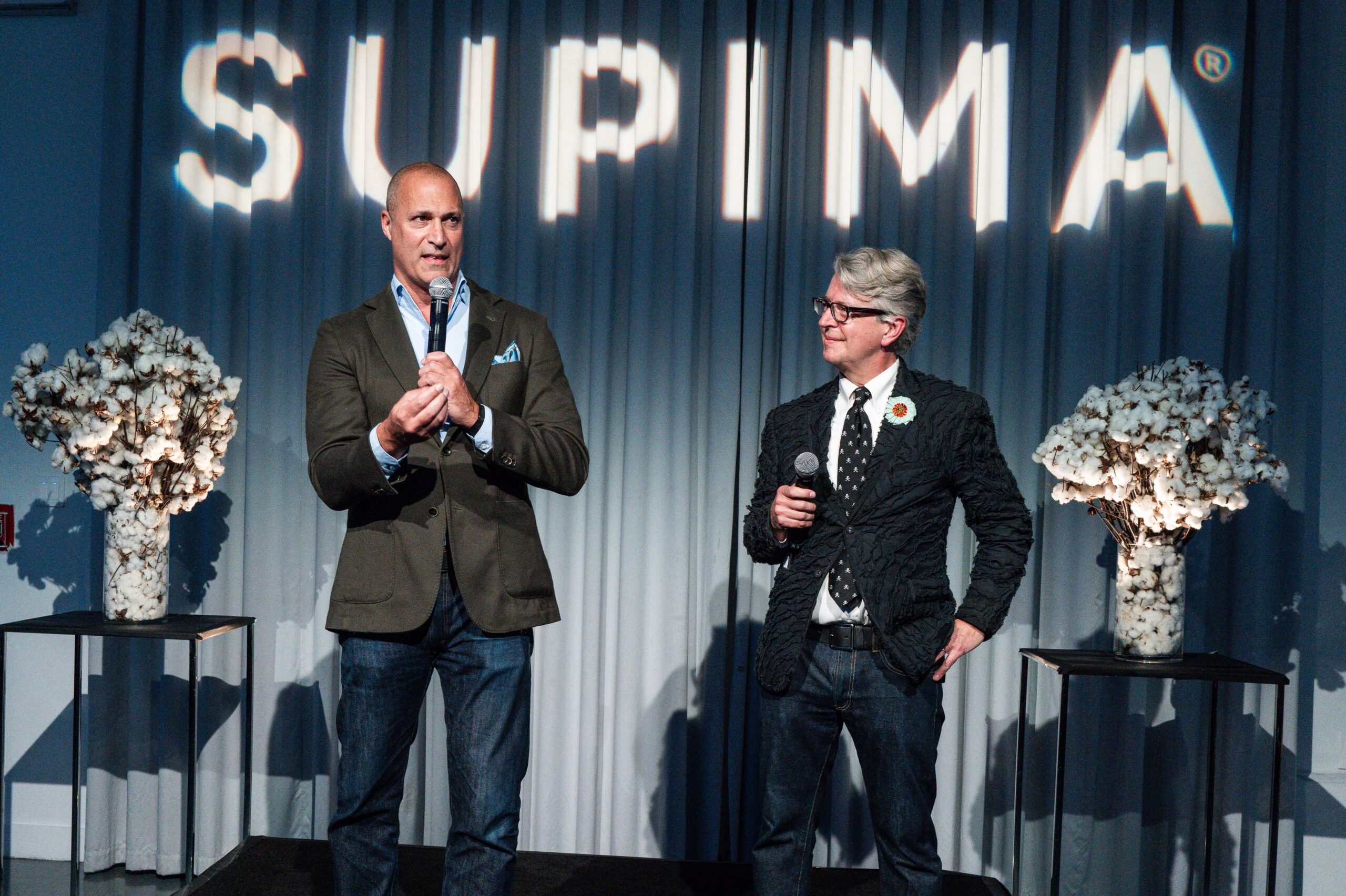
Supima brought together emerging and established designers from around the world for the 2026 Supima Design Lab on November 5 at Lavan Studios Midtown in New York City. Hosted by fashion photographer, filmmaker and television personality Nigel Barker, the presentation united the Supima Design Competition finalists, Festival d’Hyères winners & finalists and a group of leading international designers for an evening celebrating creativity and craftsmanship.
Presented in an immersive format, the Design Lab invited guests to experience the collections up close and meet the designers behind them. Every look in the showcase had been created using Supima cotton, offering a view of the American-grown fiber’s versatility through a wide range of silhouettes, techniques and creative perspectives.
We had a chance to talk to Nigel Barker about his career, his mentorship, and the Supima Design Lab
SOCIAL: Nigel, you’ve worn nearly every hat in this industry, from model, photographer, author, TV host, and mentor. Looking at this current chapter of your career, what draws you to projects like the Supima Design Challenge compared to where you focused your energy a decade ago?
Nigel Barker: You know, I’ve done a lot in my life for sure, but it’s always been in the fashion world, one way or the other and this is an industry that has many different roles that you can play when you’re when you’re in the fashion industry though, yes you can be everything from, to say, a model, all the way through to a fashion designer, to a fashion photographer, and stylist, makeup artist, fashion stylist, um you know, there’s just lots of different pieces to it. And when you realize sometimes you’ll see me and you’ll think that okay, that’s the guy, but really I’m one part of a team. And I might be the face of it, because you know, I’m a forward-facing piece, but I couldn’t do what I do without having all those people around me. So, mentoring and giving advice and bringing people up is the name of the game in the fashion industry. You know, this is an industry which, as much as you can study it at school, you really have to experience it in the real life and be taught by the people who are doing it. And that’s one of the great things about the Supima Design Competition is that you know, designers award-winning CFDA designers like Bibhu Mohapatra, for example, giving advice, their style, their expertise, giving their eye to the detail, really helping these young designers raise the bar and their game and to be a part of that in any level is an honor.
SOCIAL: Your career has always had a strong narrative element, whether through the lens of a camera or a TV screen. How has your definition of ‘impact’ in fashion evolved as you’ve shifted more into mentorship and hosting platform-driven showcases?
Nigel Barker: The fashion industry is all about trends and fads anyway, so things are always moving, you know there’s several seasons a year, right? Everyone’s looking for what’s next, where are we headed, what’s the new big thing? The new material, how do we use that material, and then also fashion reacts to politics, it reacts to the weather, it reacts to the world at large, it reacts to culture, so there’s a lot of things that fashion is reacting to and speaking to and so as trivial as fashion sometimes might appear, it’s actually far more fundamental than we would imagine. In fact, just wearing colors, wearing styles can say something about who you are and how you want to be perceived. And I think, you know, when you when you realize that power in fact, just something from very simple, for example, if you wear navy blue to your um you know, in front of a jury, you’re 20% more likely to be proven innocent by a jury just by the color, right? So color suggests things to people, you know, if you wear a fiery red and you walk into a party and into a room, people will think, wow, this person really wants attention, and they’re really all about it. And when you look at a room like this with incredible designs by each one of these designers, like the ones right behind me here, you know they’re both cinematic, they’re architectural, they bring in concepts of engineering and fashion design all wrapped together in a bow.
SOCIAL: Millions of viewers grew up watching you guide emerging talent through high-stakes television environments like America’s Next Top Model and The Face. How did that intense TV experience shape how you evaluate, talk to, and support young designers today who are stepping onto a big stage for the first time?
Nigel Barker: You know, for me I sort of always been in the world in the fashion world and in front of the camera and in many different ways. I got my own break in fact from a modeling competition back in the late 80s in the UK, that was on television. So, I’ve sort of been in the public eye for pretty much my entire career. What I take from that is that it gives you a platform where people will listen to you um and therefore your words have weight and have feelings and are important. So, the ability to inspire people to want to get into fashion, to want to make a difference with what they’re doing, to help showcase and by the way, as young photographers out there too, I’ve always talked to them about the importance of doing all the things connected to what photography can do. In other words, find a cause, a serious issue, help showcase that, or shine the light on it. Fashion has been a big supporter of giving back since the beginning, and CFDA with Fashion Targets Breast Cancer, for example, the Supima Design Competition supporting young designers, giving them both a financial prize, but also recognition, these are the things that help really project someone’s career, take it to that next level. So without events like this, it is very hard to break out and make a name for yourself.
SOCIAL: The Supima Design Challenge brings together talent from top design institutions across the country, from FIT and Parsons to Kent State, Drexel, SAIC, and Pratt. What unique perspective or energy do you notice coming from student designers working outside traditional fashion capitals?
Nigel Barker: You know, personally when I look at fashion, and I’ve obviously been to runway shows from Paris, New York, Milan, Tokyo over the past 30 plus years, I always look really as a photographer first and foremost. You know, I look to see what would inspire me, what would I want to photograph, what would help create the fantasy, create the dream. And you know, I think too when people shop, certainly the daring ones, they look to see what can I get when I walk in the room that would turn people’s heads, you know, when that would grab their attention, that would peak their desire. And you know, when you do that’s really in many ways what fashion’s about. And of course there are cultural aspects of fashion as well where it’s about a certain respect or a certain color at a certain time of the year and certain things like that, but when you think of couture, and you think of certainly like what’s exactly around me right now, it’s about taking you on a dream. And so that’s what I look for: can this designer take me with them on their journey and make me ask a question, what’s next?
SOCIAL: If you could leave these student finalists with one core piece of advice as they prepare to launch their own brands in an unpredictable global market, what would it be?
Nigel Barker: It’s very hard to give advice to someone who’s a creator, but my number one thing is always to do it yourself. Try not to be edited by other people. You know, I’ve had great mentors, great people throughout my life and you know, we live in a world where we’re looking for thumbs up, likes, hearts, you know, to be appreciated, how many likes does this get on social media, when ultimately, to be truly brilliant at what you do, it’s about having your own signature style, it’s about not really caring what anybody else thinks, it’s about knowing when you’ve got it right. It’s about knowing when to put that paintbrush down, when to put that needle down, or to pick it up again because you want to fix it, not because someone else told you to, because you want to. Don’t forget this is your vision, your moment, it’s up to you to create something that drives you. I photograph and I shoot for me first, and if I know that I’m happy, then I’ve kind of done my job. You hope that people like what you do, but that it has to be a secondary piece, otherwise you go from fashion to commercial. And if you’re just shooting for other people, not really creating something unique, you all know what I’m talking about.
Photo Credit: Matthew Carasella